Hey Superheroes,
The big news dropped on Wednesday this week with the AI trade and AU Inflation in the spotlight.
In the US, Nvidia posted the biggest quarter any chipmaker has ever seen. Revenue was US$96.2 billion, up 106%* year-on-year, and the company told the market that fiscal 2028 growth of around 70% is now the floor rather than the ceiling. CEO Jensen Huang’s line summed up the moment: “Compute is revenue. And demand is accelerating.” More on that shortly.
Closer to home, the reality check was firmer. Australian headline CPI eased to 3.5% in July (from 3.8%) but overshot the 3.3% consensus, and the trimmed mean (the RBA’s preferred gauge) held at 3.6% while posting its biggest monthly rise in a year. Fuel prices bounced 7.5% in the month alone.
Markets responded fast. Odds of a September 29 rate hike jumped from 17% to 27–36%, with an 80%+ chance now priced in by February 2027. Three of the four major banks flipped their rate-call within 24 hours. More on that story below, too.
Here’s what moved this week.
Nvidia’s $96 Billion Quarter
If Nvidia is a proxy for the AI trade, the AI trade is doing just fine.
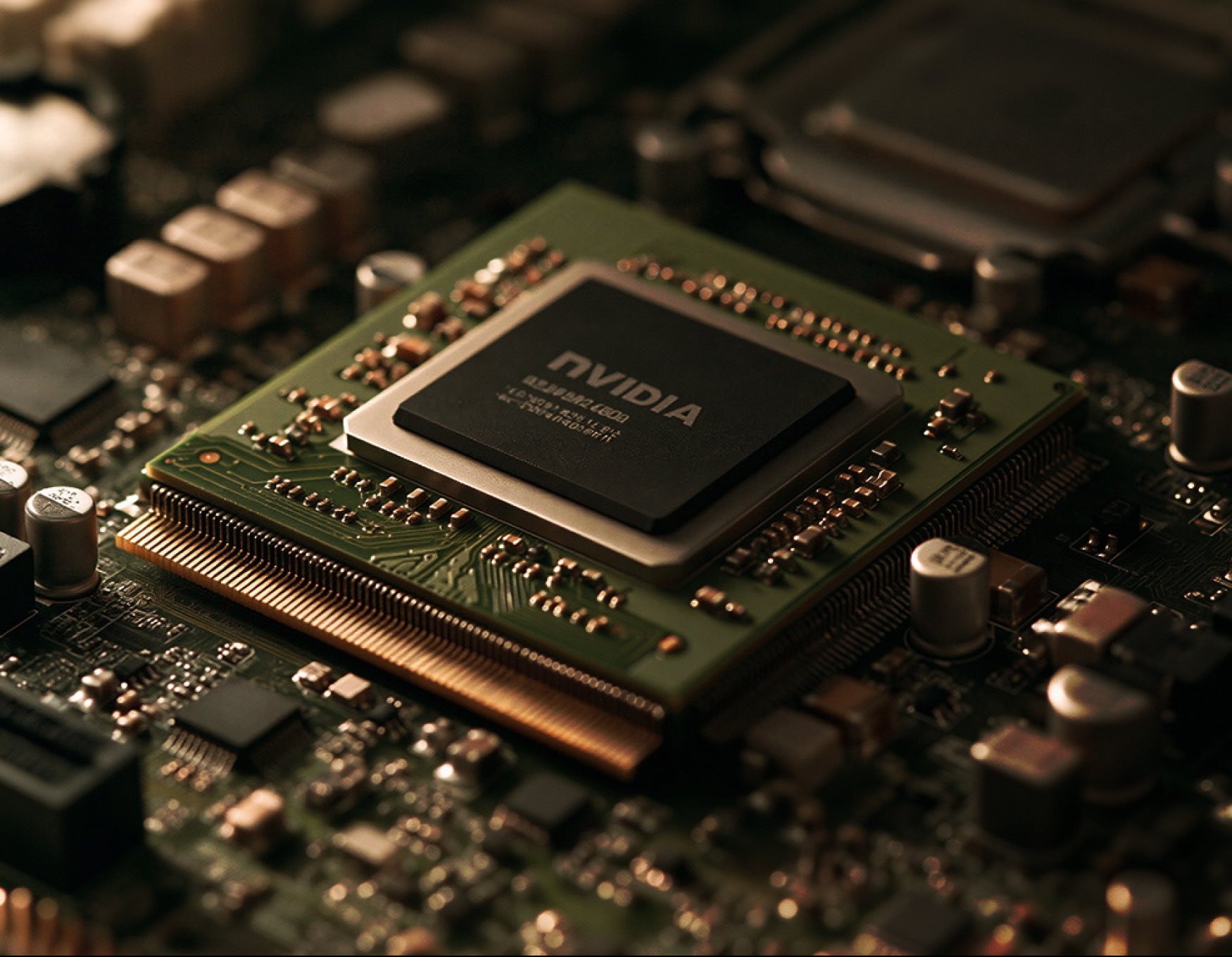
Nvidia (NASDAQ:NVDA) reported Q2 fiscal 2027 results after the close on Wednesday. Revenue was US$96.2 billion, up 106% year-on-year and 18% sequentially *. Non-GAAP EPS came in at US$2.22 against a US$2.09 estimate. It was the fourteenth consecutive quarter Nvidia has beaten its own guide.
🖥️ The data centre keeps compounding
Data centre revenue was the story. Sales hit a record US$89.0 billion, up 117% year-on-year and 18% from Q1. That’s about 92% of total company revenue now flowing from AI infrastructure. Hyperscaler demand was strong; the ACIE segment (AI clouds, industrials, enterprises and sovereigns) grew 138% year-on-year.
Zero H100 sales to China this quarter, versus US$4.6 billion the same quarter last year. Geopolitics still counts.
🚀 Vera Rubin is on
Production shipments of Nvidia’s next-generation Vera Rubin platform have started ahead of schedule, and management expects it to represent about 20% of Q3 data centre revenue. Nvidia also announced an expanded AWS partnership to deploy 2 million additional GPUs.
Supply commitments now sit at US$279 billion, mostly memory for Vera Rubin, meaning the FY28 buildout is essentially locked in.
📊 The bull case, and the pinch point
Nvidia guided Q3 to US$108 billion, roughly US$12 billion sequential growth. For fiscal 2028, CFO Colette Kress said revenue growth of approximately 70% is the base case, or as she put it, “supply-constrained.” In other words, they can sell everything they can make.
The one caveat: gross margins are under pressure from memory costs, guided at 74% for Q3 and 71–72% for Q4. That’s the memory supercycle we covered a few weeks back showing up on Nvidia’s income statement. Jensen’s counter, “compute is revenue”, reframes the debate. If customers are actually monetising the compute they’re buying, the margin story stops mattering as much as the volume story.
Three of Four Banks Flip to Hike
On Wednesday, the Aussie inflation narrative that had been trending down for eighteen months quietly reversed.
📈 What the CPI actually said
The Australian Bureau of Statistics released July monthly CPI on Wednesday. Headline inflation eased to 3.5% year-on-year, down from 3.8% in June, but the fall was largely arithmetic (last year’s July was unusually strong, so it dropped out of the 12-month window).
The real signal was underneath. The trimmed mean, the RBA’s preferred core inflation measure, held at 3.6% for a third consecutive month and rose 0.5% in July alone, the sharpest monthly increase in a year. Headline monthly CPI rose 1.0%, above the 0.8% economists expected. Fuel jumped 7.5% in the month. Housing costs continued to run at 5.0% year-on-year.
The RBA had been forecasting trimmed mean to slow to 3.3% by year-end. On current trajectory, that target now looks tough.
🏦 The bank rethink
Three of the four majors changed their rate-call within a day. NAB is now the most hawkish, calling for an imminent hike at the RBA’s 29 September meeting with the risk of a second in November. CBA and ANZ both pulled their next-move calls forward to a November hike, with CBA’s Belinda Allen noting “the pace of disinflation has stalled.” Westpac held its hold-through-2026 view, but flagged that the risk of a November move has increased.
Money markets moved with them. September hike odds re-priced from 17% to as high as 36% (36% is Babypips’ read; the more common quote is 27%). By February 2027, markets are pricing an 80–94% chance of at least one hike.
💡 What it means
For mortgage holders on variable rates, a hike from 4.35% to 4.60% would add roughly $88 a month to repayments on a $600,000 loan. For dividend-paying banks and franked-yield names, higher rates for longer generally means more margin.
The ASX 200 was actually modestly higher on Wednesday, trading at a two-week high, as investors read the print as neutral for equities so long as the RBA moves methodically. The next test is the August labour force numbers, due 18 September, 11 days before the RBA decision.
🔦 Some other things we’re shining the Spotlight on:
Salesforce has its second-best day ever: Salesforce (NYSE:CRM) surged 22.6% on Thursday, its biggest one-day move since August 2020, after Q2 revenue of US$11.35 billion beat expectations and management raised full-year guidance. A US$2.6 billion accounting gain on its Anthropic stake generated adjusted EPS to US$5.90 versus a US$3.27 consensus. Same day, Salesforce and Anthropic launched Claudeforce, embedding Claude across Salesforce, Slack and Agentforce. The SaaSpocalypse fears from earlier this year are officially in the rearview mirror.
Sigma bags the broker upgrade: Sigma Healthcare (ASX:SIG) posted full-year revenue of $10.8 billion, up 15.5%, with normalised NPAT up 22.3% to $732.3 million as the Chemist Warehouse network expanded to nearly 1,000 pharmacies globally. Bell Potter upgraded the stock to Buy from Hold this morning with a $3.00 price target. Ireland and New Zealand are the growth engines to watch.
CrowdStrike’s “Mythos moment”: CrowdStrike (NASDAQ:CRWD) shares jumped 11% after Q2 revenue of US$1.47 billion (+26%) came in well ahead of consensus and management raised full-year guidance to US$5.99–6.01 billion. Net new ARR of US$333 million was a record and grew 51% year-on-year. CEO George Kurtz called it “the best quarter in CrowdStrike’s history,” pointing to a “Mythos moment”: the industry’s scramble to defend against Anthropic’s Mythos model that can exploit previously unknown vulnerabilities. AI is driving cyberattacks, and cyber spending with them.
Keep up to date on the markets by following us on Instagram @superheroau.