Apple’s first touchscreen MacBook went on pre-order on 28 October 2026, ending nearly two decades of resistance to touch on the Mac. The new MacBook Pro starts at US$2,899, one of Apple’s priciest laptops, and it arrives as higher prices are already pushing buyers away from PCs. Bloomberg reports the aim is more revenue from higher prices. The test comes in Apple’s December-quarter results, where Mac sales will show whether buyers pay up for touch.
What changed
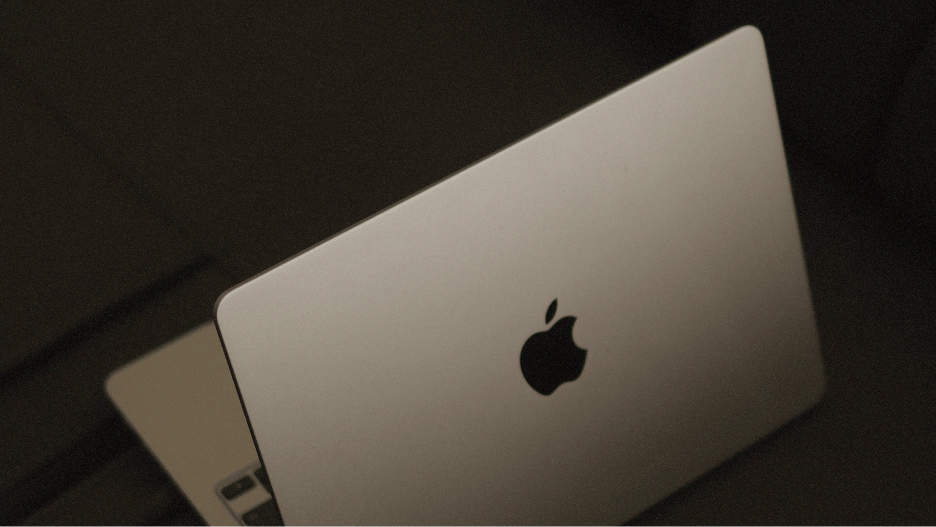
On 28 October 2026, at an event in Los Angeles it called Pro and Tell, Apple introduced the MacBook Pro with PROLED XDR Display, the first Mac with a touchscreen (Apple Newsroom). Chief executive John Ternus, who took over from Tim Cook in September, showed it on stage (Reuters). Pre-orders opened the same day and the laptop goes on sale on 6 November. Apple says many existing apps work with touch straight away because macOS translates a tap into a click.
Apple long argued against touch on the Mac. In 2010 Steve Jobs said touch surfaces “don’t want to be vertical” and that after a while “your arm wants to fall off” (Wired). Reuters and Bloomberg both report he called touch laptops “ergonomically terrible”, and in 2012 Tim Cook compared the idea to combining a toaster and a refrigerator. In 2021, Ternus, then Apple’s head of hardware engineering, said the Mac was “totally optimized for indirect input”, meaning a trackpad and mouse, and that Apple had not felt a reason to change that (9to5Mac).
Bloomberg describes the opposition inside Apple as lasting nearly two decades, with executives laughing at the idea in interviews (Bloomberg via The Sydney Morning Herald). Apple’s only earlier touch feature on a Mac, the Touch Bar, a thin strip above the keyboard launched in 2016, was dropped by 2023.
Touch, meanwhile, became normal everywhere else. Reuters reports touchscreens have been widely available on Windows laptops for more than a decade. IDC counts 33.4 million touchscreen notebooks shipped in 2025, 16 per cent of all notebooks, at an average price of about US$1,009, well below Apple’s prices.
Why it binds
The Mac is a small part of Apple, but a growing one. It brought in about US$33.7 billion in Apple’s 2025 financial year, about 8 per cent of total sales of US$416 billion (Apple annual report). Its sales swing from quarter to quarter. In the December quarter of 2025 they fell about 7 per cent on a year earlier, to US$8.4 billion (Apple results). In the June quarter of 2026 they rose about 29 per cent, to a June-quarter record of US$10.4 billion (Apple results).
That record was helped by demand at both ends of the range: MacBook Neo, launched in March from US$599 as Apple’s most affordable laptop ever (Apple Newsroom), and MacBook Pro (Barchart). Reuters reports that recent Mac growth has come largely from technology enthusiasts and from businesses buying Macs to run AI tasks on the device.
The touchscreen goes to the other end. The 14-inch model starts at US$2,899 in the US and A$4,599 in Australia, against US$1,999 for the cheapest MacBook Pro without touch, a 14-inch model with Apple’s M6 chip (Mac Observer). Reuters notes that the cheapest touch model costs more than an entry-level iPhone, MacBook, iPad with accessories, Apple Watch and AirPods combined. Bloomberg reports the hope is to give the Mac new momentum and raise revenue through higher prices driven by premium features. Reuters reads the widening price range as Apple chasing budget-conscious buyers without losing its premium customers. Apple itself has not said why it changed course now.
Who absorbs it
The launch lands in a weak market. Gartner estimates global PC shipments fell 22.4 per cent in the September quarter, a decline it says was driven by higher prices as memory and storage costs rose and PC makers passed those costs on to customers (Gartner). IDC puts the fall at 20.1 per cent (IDC via 9to5Mac). Both firms put Apple’s fall well below the market’s. Gartner estimates Mac unit shipments fell about 7 per cent, the smallest fall of the six biggest makers. IDC has Mac shipments down 11.3 per cent to 5.9 million, lifting Apple’s share of PC shipments from 8.5 to 9.5 per cent.
Apple is aiming the touch model at professionals. IDC’s Tom Mainelli told Reuters it is “going to be towards creators, towards designers, towards photographers.” Some analysts question how far it can reach in a market dominated by business buyers, where Lenovo, HP and Dell sell cheaper machines.
For Apple’s shareholders the Mac is a small slice of the business, so the touchscreen matters less for its direct revenue than for what it shows. If buyers pay a premium for a new feature while the PC market shrinks on price, that supports Apple’s ability to charge more. If they hold back, the Mac’s growth rests on cheaper models like MacBook Neo, and the touch model may add little.
What to watch
Apple’s next results, on 2 November 2026 US time (3 November morning in Australia), cover the September quarter, before the touch model went on sale. Apple guided revenue growth of 9 to 11 per cent for that quarter. Those results show Mac demand going into the launch, not the launch itself. They will also show whether higher memory costs are squeezing Apple’s margins, a pressure Apple flagged when it gave that guidance.
The first quarter with touch sales is the December quarter, which Apple reports early in 2027; it has not set the date. The comparison is Mac revenue of US$8.4 billion in the same quarter a year earlier.
A rule for reading it: Mac revenue above US$8.4 billion while the PC market is still shrinking could suggest demand is holding up at higher prices, and Apple’s comments on its results call could show how much of it came from the touch model. A figure at or below it could suggest the higher price is holding buyers back, and that the Mac still depends on its cheaper models. A second signal is the December-quarter shipment estimates from Gartner and IDC, which show whether Apple keeps gaining share at higher prices. IDC expects PC pricing to stay well above year-ago levels, so the touch model will be tested in a market where every laptop costs more than it did a year ago.
Frequently asked questions
When does the Apple touchscreen MacBook go on sale?
Pre-orders opened on 28 October 2026 and the MacBook Pro with PROLED XDR Display goes on sale on 6 November. The 14-inch model starts at US$2,899 in the US and A$4,599 in Australia. It is the first Mac with a touchscreen.
Why did Apple add a touchscreen to the Mac?
Apple has not given a reason beyond the product itself. Bloomberg reports the hope is to give the Mac new momentum and raise revenue through higher prices driven by premium features. Touch is already common on Windows laptops: IDC counts 16 per cent of notebooks shipped in 2025 with touchscreens.
What does the touchscreen MacBook mean for Apple shares?
The Mac was about 8 per cent of Apple’s sales in its 2025 financial year, so its direct effect on revenue is small. The first read on touch sales comes with the December-quarter results early in 2027, against US$8.4 billion of Mac revenue a year earlier.