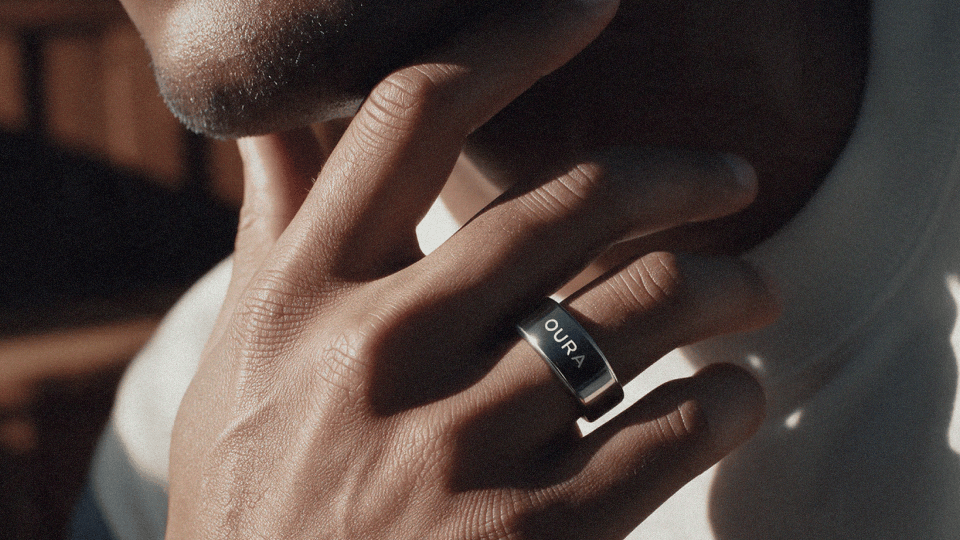
Oura’s Counsel Health deal puts doctors inside a smart ring’s app. On 10 November 2026, Oura agreed to buy Counsel Health, an AI-led primary care company whose doctors can diagnose and prescribe, for US$625 million in cash. The catch: Oura’s ring is sold as a wellness product that cannot diagnose. The deal came six weeks after Oura put its US listing on hold, and Oura has not said when that listing will return.
Here’s what changed, why the ring needs doctors, who’s paying for it, and what to watch next.
What changed
On 10 November 2026, Oura and Counsel Health announced that Oura is acquiring Counsel Health for US$625 million in cash, subject to adjustments to the final price. The deal is an agreement, not yet completed, and is expected to close before the end of the calendar year. TechCrunch and Reuters reported the same price.
Counsel combines medical AI with its own in-house physicians. In the Oura app, a conversation can be passed to a board-certified Counsel physician within minutes, and that physician can provide a diagnosis, prescriptions and referrals where appropriate.
On its own site, Counsel charges US$29 to add a doctor to a chat. Oura has not said what its members will pay.
Oura reported its fiscal fourth quarter in the same release. Revenue for the three months to September 2026 grew 153% from a year earlier to US$533 million, and fiscal-year revenue was about US$1.75 billion, up 92%. Oura says it has over six million members and made US$87 million of adjusted EBITDA, a measure of earnings before interest, tax, depreciation and amortisation, in the quarter, a 16% adjusted EBITDA margin. These figures are preliminary and unaudited.
The timing stands out. On 29 September 2026, Oura postponed its US IPO, citing market uncertainty, after marketing shares at US$40 to US$44. Reuters reported that the top of that range meant raising US$2.2 billion at a fully diluted valuation, which counts options and other shares not yet issued, of US$15.62 billion.
The Wall Street Journal reported the delay came despite strong demand, because of uncertainty in the IPO market. A postponed listing is not a cancelled one, and Oura has not withdrawn it. TechCrunch and Reuters reported that its last private valuation was about US$11 billion, set in a US$900 million funding round in October 2025.
Why it binds
The ring collects data on sleep, heart rate and other body signals every night, but the law limits what it can say about that data. Oura’s own announcement repeats that the Oura Ring “is not a medical device and is not intended to diagnose, treat, cure, monitor, or prevent medical conditions or illnesses.”
A wellness product can describe patterns, such as a change in resting heart rate or a run of poor sleep. It cannot tell a member what condition they have, and it cannot prescribe anything for it. That keeps the ring outside the stricter rules that apply to medical devices, but it also caps what Oura can sell on top of the data.
The US Food and Drug Administration has shown where that line sits. On 14 July 2025, it sent a warning letter to WHOOP, a rival wearable maker, saying its Blood Pressure Insights feature was inherently tied to diagnosing high and low blood pressure and needed approval it did not have. The letter said that because WHOOP did not have an approved premarket application in effect, the FDA treated the feature as an unapproved medical device. It was not a fine or a ban, and WHOOP disagreed at the time. The FDA closed the letter on 17 June 2026 after WHOOP changed the feature.
Oura’s current blood pressure feature stays on the wellness side. MedTech Dive reports that it does not show systolic and diastolic readings. The same report says Oura has a separate, ongoing study of another blood pressure feature, meant to surface hidden hypertension risk, which would be regulated by the FDA. Cardilog reports that this research, the Blood Pressure Profile Study, ended in August 2026, and that Oura has not announced FDA clearance for the feature. No filing date or timeline has been given.
That is the gap Counsel fills. Doctors are allowed to do what the ring cannot: diagnose, prescribe and refer. Oura’s executive chairman, David Shuman, put it this way in the release: “Oura tells members what’s happening in their bodies, and Counsel helps them act on it.” If the regulated feature is ever cleared, Oura could have both halves in one app: a ring that flags a possible problem, and doctors who can diagnose it.
Who absorbs it
Oura is paying in cash, not shares, so the cost sits with the company and its private shareholders before any listing. The company says the deal increases lifetime value, meaning what each member is worth over time, and expands its addressable market, the pool of people it could sell to. In practice, that means a member who notices something in the app can be passed to a doctor without leaving it, and Oura can earn from that step instead of sending the member elsewhere.
Counsel also brings customers beyond Oura’s own members. Its service is sold through health plans, health systems, consumer health organisations and employers, which Oura says opens the door to millions of people beyond its existing member base.
Oura is not alone in moving toward doctors. On 8 May 2026, WHOOP announced live, on-demand video consultations with licensed clinicians inside its app for US members, launching in the northern summer. WHOOP’s platform also includes an FDA-cleared ECG.
Mubadala said WHOOP raised US$575 million at a US$10.1 billion valuation in March 2026, and Bloomberg described that round as a milestone on its way to an initial public offering.
Apple has the other half. The FDA cleared Apple’s Hypertension Notification Feature on 11 September 2025. It analyses data collected by Apple Watch to identify patterns suggestive of hypertension and sends a notification. It is an alert, not a blood pressure reading or a diagnosis.
Other companies are moving toward the same goal. WHOOP has announced clinicians in its app, Apple has a cleared alert, and Oura is paying to own a company of doctors while it studies a regulated feature of its own.
What to watch
One public measure could come if Oura revives its listing. In September 2026, Reuters reported, it sought a valuation of up to US$15.62 billion, fully diluted, at the top of its range.
A valuation above that level could mean investors are paying for the ring and the doctors together, and see the deal as a way to raise what each member is worth. A valuation below it could mean the market is not yet paying for the doctor strategy, after a large cash outlay made before Oura was valued again.
Two other markers sit alongside the listing. The first is whether the deal closes before the end of the calendar year, as the companies expect. The second is whether Oura’s regulated blood pressure feature is filed with or cleared by the FDA. Oura has given no timeline for either the feature or a new listing date.
Frequently asked questions
What is the Oura Counsel Health deal?
Oura agreed on 10 November 2026 to buy Counsel Health for US$625 million in cash. Counsel pairs medical AI with in-house physicians who can diagnose, prescribe and refer inside the Oura app. The deal is expected to close before the end of the calendar year.
Why does Oura need doctors if it makes a smart ring?
Oura says its ring is not a medical device and is not intended to diagnose medical conditions. Counsel’s doctors can diagnose and prescribe, so the deal lets Oura offer that step inside its own app.
Is Oura going ahead with its IPO?
Oura postponed its US IPO on 29 September 2026, citing market uncertainty. It was postponed, not withdrawn. At the top of its US$40 to US$44 range, Reuters reported a fully diluted valuation of US$15.62 billion. No new date has been set.
Sources
- Oura and Counsel Health: Oura to acquire Counsel Health (10 Nov 2026)
- TechCrunch: Oura to acquire Counsel Health for $625M
- Reuters: Oura to acquire Counsel Health
- Reuters: Oura delays US IPO (29 Sep 2026)
- FDA: warning letter to WHOOP (14 Jul 2025)
- FDA: closeout letter to WHOOP (17 Jun 2026)
- MedTech Dive: Oura blood pressure feature
- WHOOP: on-demand clinician access (8 May 2026)
- FDA 510(k) K250507: Apple Hypertension Notification Feature
- Cardilog: Oura Ring blood pressure
- Mubadala: WHOOP raises US$575 million at a US$10.1 billion valuation
Superhero does not provide financial advice that considers your personal objectives, financial situation or particular needs. All investments carry risk so please consider carefully before investing and be aware that past performance is not indicative of future performance. Graphics, charts and graphs provided for illustrative purposes only. View our FSGs to consider if Superhero is appropriate for you. Superhero Markets Pty Ltd (ABN 36 633 254 261) is a Corporate Authorised Representative (CAR 1276309) of Superhero Securities Limited (ABN 96 160 456 315, AFSL 430150).