Hey Superheroes,
US consumer prices rose 3.7% year on year in September, above August’s 3.4%, with energy prices surging 20.4% over the year as the main driver of the acceleration. Core prices rose 2.6%. The read: expectations of a Federal Reserve pause in October are looking increasingly premature, and the meeting will be a closer call than markets anticipated a month ago.
In Australia, unemployment climbed to 4.7% in September, the highest since October 2021, as employment fell 39,300 in the month, well outside market expectations. The result complicates the RBA’s next move after the Bank raised the cash rate to 4.60% two weeks ago, with a weakening labour market now pushing back against further tightening.
Is CoreWeave the first domino to fall?
CoreWeave built its business on a simple premise: hyperscalers and AI companies would pay a premium for dedicated, on-demand GPU compute rather than wait in line for shared cloud resources. In 2024 and 2025 that looked prescient. In 2026, the bond market is asking a harder question about what that bet costs when it is financed almost entirely with debt.
The numbers
CoreWeave (NASDAQ:CRWV) saw its 10-year bond yield touch 15%, levels that reflect significant market concern, as investors soured on the company’s approach to financing its GPU buildout. The share price fell around 10% in tandem. CoreWeave has funded its infrastructure expansion primarily through high-yield debt, issuing bonds against the contracted revenue it expects from GPU cluster deployments for AI clients.
Why it matters
A 15% yield on a 10-year bond is the credit market saying it does not believe the underlying cash flows fully support the debt load at face value. The bond market’s reaction is a broader warning: AI infrastructure companies have been raising high-yield debt to fund capital-intensive GPU clusters, and investors are starting to price in execution and refinancing risk that equity markets had largely overlooked. For CoreWeave specifically, the concern is timing: contracted revenue and recognised revenue are not the same thing, and any deployment slippage pushes cash flows further out while debt service obligations remain fixed. The 10% equity sell-off alongside the bond move suggests investors are connecting those dots in real time.
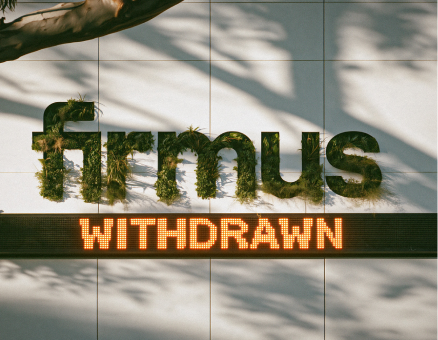
The contagion concern is not theoretical. Firmus, an Australian AI infrastructure company, withdrew its planned ASX IPO after failing to attract sufficient investor support, with analysts flagging debt levels and cash flow visibility among the key concerns. CoreWeave’s chief executive responded directly, saying the failed Firmus float was “bleeding into the narrative” around AI infrastructure companies, an unusually candid acknowledgment that one company’s market rejection is reshaping how investors assess the whole sector. That CoreWeave felt compelled to address Firmus publicly at all is itself a signal of how quickly sentiment in AI infrastructure credit is shifting.
What the numbers don’t tell us
The market is still working through whether this is a CoreWeave-specific stress point or the opening act of a wider repricing across AI infrastructure credit. CoreWeave is not the only AI infrastructure company funding GPU buildouts with high-yield debt, and several others have followed the same playbook. If debt costs stay elevated and refinancing windows narrow, building GPU clusters on leveraged capital becomes harder to sustain at scale. The credit market’s verdict on CoreWeave this week could set the tone for how investors price that risk across the sector.
Berkshire Hathaway lifts Bending Spoons stake to 4% with US$330m investment
Berkshire Hathaway has spent most of 2026 on the sidelines of the AI capital expenditure cycle. Under new CEO Greg Abel, the company’s approach has remained consistent with its longstanding preference for businesses built on durable, predictable cash flows rather than capital-intensive infrastructure bets. Its continued backing of Bending Spoons makes that preference explicit, and the market listened.
The investment
Berkshire Hathaway invested a further US$330 million in Bending Spoons (NASDAQ:BSP), lifting its total stake to approximately 4% following the US$600 million it committed at the Italian company’s IPO earlier in 2026. Bending Spoons shares surged 41% on the announcement. The company operates a portfolio of consumer subscription apps including Evernote, Splice and Remini, acquiring established products, reducing operating costs and growing subscriber bases through targeted product investment.
What Berkshire is backing
Bending Spoons’ model is structurally simple in the way Berkshire has historically valued: subscribers renewing monthly or annually, high software margins and sticky retention. That stands in deliberate contrast to the GPU capital expenditure cycle, where returns depend on deployment timing, utilisation rates and whether hyperscaler clients renew at scale. The market’s 41% share price reaction reads the investment as a validation of the subscription model at a moment when most tech growth plays are struggling to attract value investors. A further US$330 million in a company already backed at IPO is not a signal. It is Abel deepening conviction after watching the business operate in public markets for several months.
What the stake doesn’t settle
A 4% stake is meaningful but not controlling, and Berkshire’s confidence in the model does not resolve the execution question at the centre of Bending Spoons’ story. The company’s growth is acquisition-led: it buys consumer apps, cuts costs and builds subscriber bases. Replicating that across dozens of apps simultaneously carries integration risk that subscription revenue multiples do not fully price. The 41% share price move on a single follow-on investment also reflects just how much the market reads Berkshire’s moves as a directional signal rather than independently pricing the business, which creates its own vulnerability if future results disappoint.
Some other things we’re shining the Spotlight on:
TSMC posts record third-quarter profit, up 68.7%
TSMC (NYSE:TSM) reported Q3 net income of NT$763.06 billion, up 68.7% on the prior year, on revenue of NT$1,494.24 billion, with net profit margin hitting a record 51.1% and diluted EPS of NT$29.43. The result reflects sustained demand from hyperscalers building AI infrastructure, positioning TSMC as the clearest beneficiary of the AI capital expenditure cycle among listed semiconductor companies. Management did not issue guidance for Q4. The risk to watch remains geopolitical: TSMC’s concentration in Taiwan is the one variable its record-setting financials cannot address.
Glencore begins trading on the ASX as a secondary listing
Glencore (ASX:GLC) began trading on the ASX alongside its primary London listing, using CHESS Depositary Interests where each unit represents one London share. No new shares are being issued. Glencore’s market value at listing was approximately A$131 billion, placing it among the largest companies on the exchange by capitalisation and giving local investors direct access to a company spanning copper, coal, nickel, cobalt and commodities trading at scale without an offshore brokerage account.
BHP and Qantas rank among Superhero’s most traded as oil holds above USD 100
BHP (ASX:BHP) and Qantas (ASX:QAN) ranked among the week’s most-traded stocks on Superhero, drawing investor attention from two directions. BHP slid as broader market sentiment soured on commodity stocks alongside the AI sector’s wobble, while Qantas faces a direct fuel cost headwind with Brent crude holding above USD 100 per barrel. The unexpected 39,300 drop in Australian jobs also weighed on domestic demand-sensitive sectors, including aviation.
Keep up to date on the markets by following us on Instagram @superheroau.