In March, the war knocked Qatar’s helium offline. That’s about a third of the world’s supply.
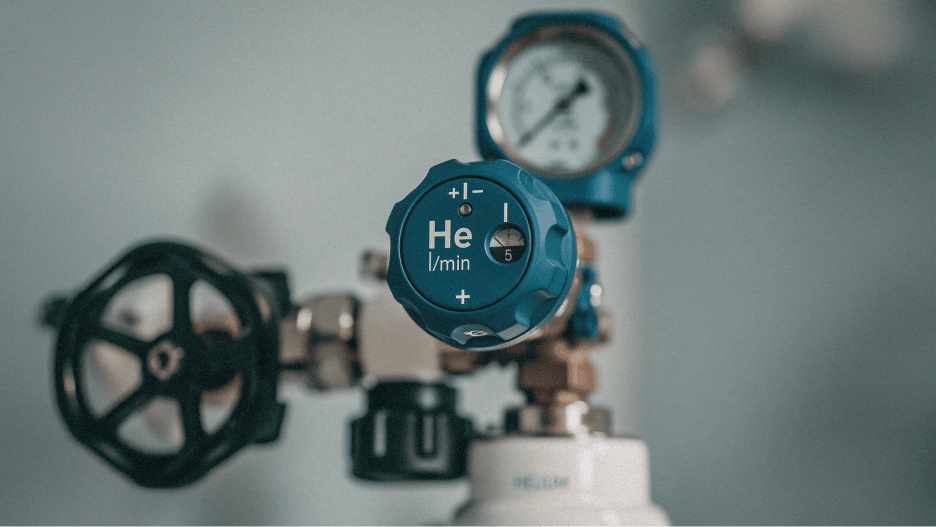
Helium keeps most MRI scanners cold. And Australia has nothing of its own to fall back on. It has imported all of its helium since its only plant, in Darwin, closed in 2023.
Here’s the catch upfront. How long this lasts depends less on new wells than on one shipping lane. That cuts both ways for the ASX-listed companies trying to produce more.
Let’s go through what changed, why helium is so hard to replace, who’s paying for it, and what to watch next.
What changed
On 2 March 2026, Qatar halted its liquefied natural gas production and the products that come with it, helium included, after drone attacks, then declared force majeure, a legal notice that it could not meet its contracts, as Fortune reported. That mattered because Qatar made about 63 million of the roughly 190 million cubic metres of helium the world produced in 2025, according to the US Geological Survey, about a third.
Later in March 2026, Iranian missiles hit the Ras Laffan complex and damaged two LNG trains, the processing units that also feed its helium plants. QatarEnergy said that alone cut 14% of its helium exports. The bigger problem is the route out. Virtually all of Qatar’s helium leaves by sea through the Strait of Hormuz, in special containers that keep it liquid for only about 35 to 48 days, and the strait has been effectively shut since early March. IMF PortWatch data counted 3.8 ship transits a day in October 2026, against 85.5 a day in 2025.
Qatar has since partly restarted. Fusion Worldwide reported in late August that one of its helium plants, Helium2, was running at roughly 25% of normal capacity, a figure no other source has confirmed, with some helium moving overland. In September, QatarEnergy said the two damaged trains will take three years to repair, but that it can resume normal operations within weeks of Hormuz reopening.
Other doors have narrowed too. Since 14 April 2026, Russia has required government approval for helium exports outside the Eurasian Economic Union, a rule that runs to the end of 2027, Interfax reported. And on 27 October the US Department of Energy added helium to its Critical Material List.
Why helium is hard to replace
Helium is hard to replace in its main jobs.
Liquid helium boils at around minus 269 degrees, cold enough to keep MRI magnets superconducting, and the USGS says nothing substitutes for it in cryogenic uses.
Most scanners in use sit in about 1,500 litres of it, according to ITN. Newer sealed designs need far less: Philips says its BlueSeal magnets hold 7 litres for life.
Chipmakers and labs depend on it as well. In the US, the USGS lists lab and specialty gases, chips and fibre optics, lifting and MRI as the largest uses. Helium is also non-renewable on human timescales: once released, it escapes the planet entirely, as UNSW researchers note.
The usual buffer is gone, too. The US once held a federal helium reserve, but the Bureau of Land Management sold it to Messer in June 2024, for about US$460 million, and the USGS now lists no government stockpile.
How short is the market?
This is where the picture gets less clear.
The market was not short going into the war. Consultants told CNBC it had been in oversupply for two years, and storage caverns softened the first months of the disruption.
How short the world is now is disputed. Phil Kornbluth put it at about 15% in March, and consultant Rich Brook of Garrison Ventures told October’s helium summit it could reach 20% if storage caverns run down.
Prices show the strain but are hard to read. The USGS put the base price for Grade-A helium at about US$330 per thousand cubic feet in 2025. Within weeks of the shutdown, spot prices roughly doubled, industry consultants said, but spot sales are only about 2% of the market in normal times, Fortune reported, because most helium is sold on long-term contracts. Fusion reported spot at US$1,000 to US$1,200 in shortage-hit regions by late August, against contracts of US$500 to US$550.
Who’s paying for it
Buyers pay first.
US distributor Airgas declared force majeure on 17 March and cut some laboratory clients’ shipments, and suppliers have rationed since.
Kornbluth said the industry gives chipmakers and medical users first call in a shortage. We found no Australian report of hospitals rationing MRI scans.
Australia has no supply of its own to fall back on. BOC’s Darwin plant, the only helium plant in the southern hemisphere, stopped in late 2023 when its gas supply ran out, the ABC reported, and Australia now imports all of its helium.
A few ASX-listed companies are trying to produce more.
Three ASX-listed companies are working on it. None of the three yet produces helium at a scale that changes the world market.
Blue Star Helium (ASX: BNL) owns half of the Galactica project in Colorado, whose Pinon Canyon plant it shares with London-listed Helium One.
It sold its first helium in July. In the September quarter it delivered five tube trailers, the road tankers that carry the gas, bringing in A$0.46 million for the joint venture as a whole, according to its quarterly report.
Its helium goes to an unnamed US industrial gas buyer under an agreement now running to 31 March 2027. It had A$2.51 million of cash at 30 September and no debt.
Gold Hydrogen (ASX: GHY) finished helium flow tests at three Ramsay wells on the Yorke Peninsula in South Australia on 20 October.
The ABC reports it expects commercial production within 18 months, though more testing and approvals are needed. It had A$3.96 million of cash at 30 September and issued new shares at A$0.44 on 6 November.
Noble Helium (ASX: NHE) is exploring in Tanzania, with drilling of its Kinambo-1 well expected to start in November, according to its ASX announcement. It had A$3.91 million of cash at 30 September.
What to watch
The main variable is the Strait of Hormuz.
QatarEnergy’s own statement says normal operations can resume within weeks of it reopening; an analyst at the October summit said sea exports were unlikely to resume even in the first quarter of 2027.
On Polymarket, a prediction market, traders put the chance that Hormuz traffic is still below normal at the end of 2026 at about 93.5%. A reopening may ease supply quickly; a longer closure keeps the shortage in place into next year.
For the ASX names, the instruments are company announcements. Gold Hydrogen is targeting its first certified helium resource in November and holds its AGM on 25 November. Noble expects to start drilling in November. Blue Star’s next quarterly report, due by the end of January 2027, will show how much helium Pinon Canyon sold.
A certified resource or a sales figure could show progress; a delay or another capital raising could show the strain of small budgets.
Frequently asked questions
Why is there a helium shortage?
In March 2026 the war knocked Qatar’s helium offline, about a third of what the world produced in 2025, and most of it is still stuck behind the closed Strait of Hormuz. Russia has also limited exports. Estimates of the shortfall range from about 15% to 20%.
Does Australia produce helium?
Not at present. Australia’s only helium plant, in Darwin, closed in late 2023 when its gas supply ran out, so Australia imports all of its helium. Gold Hydrogen has tested helium wells in South Australia and expects commercial production within 18 months.
What ASX helium stocks are there?
Blue Star Helium (ASX: BNL) sells helium from a plant in Colorado. Gold Hydrogen (ASX: GHY) is testing wells in South Australia, and Noble Helium (ASX: NHE) is exploring in Tanzania. All three are small, with limited cash.
Sources
- US Geological Survey, Mineral Commodity Summaries 2026: Helium
- UNSW: Helium supply chains (June 2026)
- ITN: Helium crisis presents potential MRI challenges
- Philips: BlueSeal Horizon helium-free 3.0T MRI (2025)
- Hyperfine: frequently asked questions
- QatarEnergy media release (19 March 2026)
- QatarEnergy media release (21 September 2026)
- Phil Kornbluth, LinkedIn: Qatar helium restart attempt
- IMF PortWatch: daily chokepoint transits, Strait of Hormuz
- Fusion Worldwide: Helium shortage 2026
- Phil Kornbluth, LinkedIn: Helium supplies are tight
- gasworld: Helium exports unlikely to resume even in Q1 2027
- Gold Hydrogen ASX announcement: flow testing completed (20 October 2026)
- Interfax: Russia helium export approvals (14 April 2026)
- Bureau of Land Management: Sale of the Federal Helium System completed (2024)
- Federal Register: Critical Material List, addition of helium (27 October 2026)
- Shale Magazine: Helium critical material designation
- ABC: Helium production ends in Darwin (6 December 2023)
- Blue Star Helium ASX September 2026 quarterly report
- Helium One RNS: First helium sold from Pinon Canyon plant (14 July 2026)
- Exchange data: Blue Star Helium (BNL.AX) daily closes
- Gold Hydrogen ASX September 2026 quarterly report
- ABC: Commercial helium on the Yorke Peninsula (21 October 2026)
- Gold Hydrogen ASX cleansing notice (6 November 2026)
- Noble Helium ASX announcement: rig mobilising (3 November 2026)
- Noble Helium ASX September 2026 quarterly report
Superhero does not provide financial advice that considers your personal objectives, financial situation or particular needs. All investments carry risk so please consider carefully before investing and be aware that past performance is not indicative of future performance. Graphics, charts and graphs provided for illustrative purposes only. View our FSGs to consider if Superhero is appropriate for you. Superhero Markets Pty Ltd (ABN 36 633 254 261) is a Corporate Authorised Representative (CAR 1276309) of Superhero Securities Limited (ABN 96 160 456 315, AFSL 430150).