

September 30, 2025
What Is an ADR?
What is an ADRs? A clear guide to American Depositary Receipts – how they work, their pros and cons, tax rules and why brokers like Superhero pass on ADR fees.


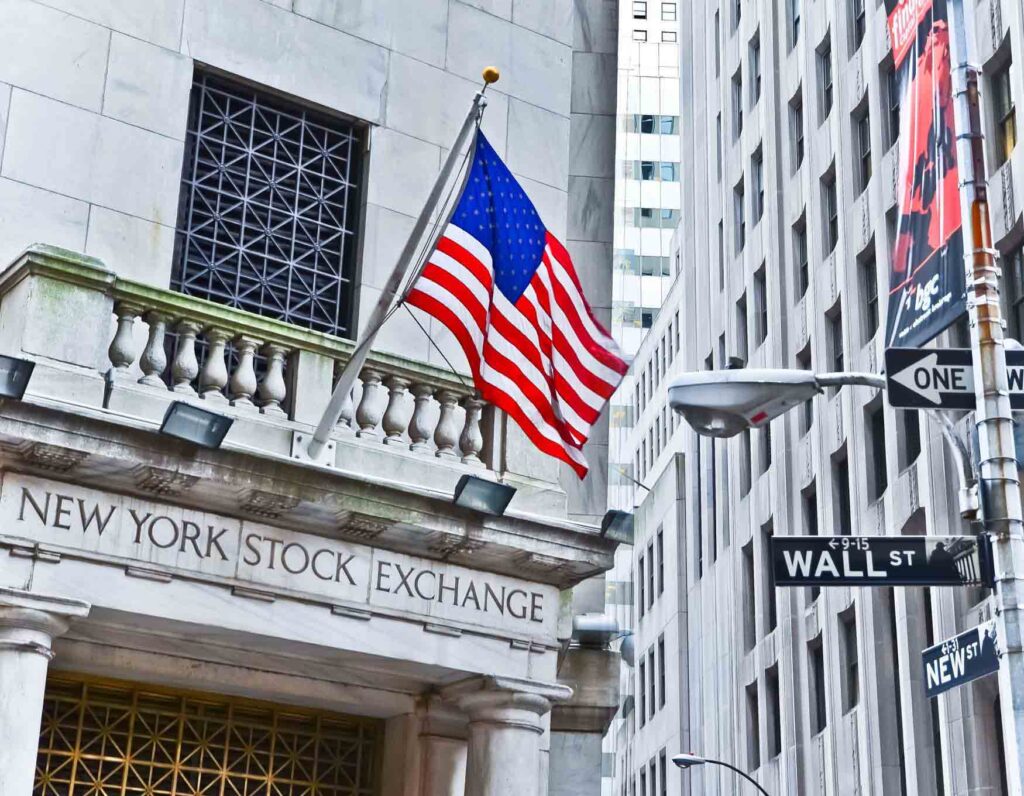
Ever seen companies like Toyota, Nestlé or Unilever pop up on the New York Stock Exchange and thought, hang on… aren’t they overseas? That’s thanks to ADRs – short for American Depositary Receipts.
ADRs make it easy for investors to buy into global companies without messing around with foreign exchanges, currency conversions or complicated paperwork. For companies, it’s their ticket to tapping into Wall Street’s massive pool of investors.
But ADRs aren’t just a finance buzzword. They’ve been around for nearly a century, giving investors a simple way to go global. This guide will break down what ADRs are, how they work, their pros and cons and whether they’re right for your portfolio.
What is an ADR?
An American Depositary Receipt (ADR) is a type of equity security issued by a U.S. bank or broker that represents shares in a foreign company. Rather than buying shares directly on a foreign exchange, investors can purchase ADRs in U.S. dollars through brokers that can access U.S. Markets (like Superhero!).
Each ADR corresponds to a set number of the company’s ordinary shares, which are held in custody overseas. ADRs may represent one share, multiple shares or even a fraction of a share.
How ADRs Work in Practice
Let’s walk through it step by step with a simple example:
- A US bank buys foreign shares
Say a U.S. bank buys 1 million shares of a Japanese company on the Tokyo Stock Exchange. - The bank holds them in custody
Those shares are stored with a local custodian bank in Japan. - The bank issues ADRs in the U.S.
The depositary bank then creates ADRs; let’s say each ADR represents 1 ordinary share. That means 1,000,000 ADRs get issued. - ADRs trade in the US
You buy the ADR on the NYSE in US dollars. Behind the scenes, you effectively own 1 Japanese share for every ADR you hold. - Dividends and reporting
If the Japanese company pays a dividend, the depositary bank collects it, converts it into U.S. dollars and pays it out to you.
So while you never directly hold the foreign shares, you get the economic exposure, wrapped in a U.S.-friendly format.
The Different Types of ADRs Explained
Not all ADRs are created equal. When a foreign company decides to set up an ADR program, it has a few options. The “level” of an ADR tells you how visible the stock will be in U.S. markets, and how much reporting the company must do. Understanding the differences is key when figuring out which ADRs fit your portfolio.
Level 1 ADRs – OTC-Only Access
- Where they trade: Only in the over-the-counter (OTC) market, not on big exchanges like NYSE or Nasdaq. These are not available on Superhero.
- Company requirements: Minimal. They don’t need to file full reports with the SEC, just publish their existing annual reports in English.
- Why companies choose it: It’s the cheapest, simplest way to “test the waters” in the US without the burden of SEC rules.
- What this means for you: Liquidity is lower, and information may be harder to come by. Level 1 ADRs can make sense if you’re comfortable with higher risk and digging into foreign company disclosures.
👉 Example: Many smaller international companies start with a Level 1 ADR to gauge investor interest before committing to a full listing.
Level 2 ADRs – Listed on US Exchanges
- Where they trade: On major U.S. exchanges like the NYSE or Nasdaq. This means they would generally be available on Superhero.
- Company requirements: Must register with the SEC, file an annual Form 20-F and follow U.S. accounting principles.
- Why companies choose it: To reach more investors and build credibility. A listing on a major exchange also improves liquidity.
- What this means for you: Easier access, stronger transparency and a more familiar experience compared to trading U.S. shares.
👉 Example: A large European industrial firm might use a Level 2 ADR to increase its U.S. investor base without raising new money.
Level 3 ADRs – Full U.S. Listing and Fundraising
- Where they trade: On a U.S. exchange, just like Level 2. This means they would generally be available on Superhero.
- Company requirements: The strictest. They must meet all SEC disclosure rules, file detailed financial reports and comply with U.S. listing standards.
- Why companies choose it: It’s the only ADR level that lets a company raise fresh capital in the U.S. by issuing new shares. This is often part of a global expansion strategy.
- What this means for you: These ADRs are generally the most liquid, most transparent and often represent some of the world’s biggest and most established companies.
👉 Example: Global giants like Alibaba and Unilever have used Level 3 ADRs to raise capital and cement their presence in U.S. markets.
Unsponsored ADRs – Bank-Led, Not Company-Led
- Where they trade: Usually over the counter. These are not available on Superhero.
- Company requirements: None. The foreign company doesn’t even need to be involved – a U.S. bank can set these up on its own.
- Why banks create them: To meet investor demand for access to a popular foreign stock.
- What this means for you: Unsponsored ADRs often provide less information, fewer rights, and may not have the same level of transparency as sponsored ADRs.
👉 Example: An investor may see an unsponsored ADR for a popular international brand that hasn’t officially listed in the U.S. While it provides access, it might not come with the same protections.
Why Do Companies Use ADRs?
From a company’s perspective, ADRs aren’t just about making life easier for investors – they’re a smart business move. Here’s why global companies go down the ADR route.
1. Raise Capital in the U.S.
The U.S. is home to the world’s deepest capital markets. By issuing ADRs, a company can tap into trillions of dollars in American savings and investments. For many it’s a chance to fund expansion, acquisitions or new projects without relying only on their home market.
👉 Example: A large Asian tech firm might launch a Level 3 ADR to raise billions for building out data centres, accessing U.S. investors who are keen on tech growth stories.
2. Boost Brand Visibility
Listing in the U.S. isn’t just about money – it’s also about reputation. A U.S. ticker symbol on the NYSE or Nasdaq puts a brand in front of analysts, media and everyday investors. It’s a signal that the company is playing on the global stage.
👉 Example: When Unilever listed ADRs, it wasn’t just about funding. It gave them a stronger foothold in their biggest consumer market – the U.S.
3. Expand the Investor Base
Many U.S. institutional investors (think big pension funds or mutual funds) have strict rules. They often can’t or won’t buy foreign-listed shares but they can buy ADRs. By offering ADRs companies instantly make themselves investable for a whole new class of investors.
👉 Example: A European industrial company might already be well known in Europe, but ADRs let it tap into big U.S. retirement funds looking for stable, dividend-paying stocks.
4. Meet Investor Demand
Investors love global brands but most don’t want the admin of trading on overseas markets. ADRs solve that problem, creating a win-win: U.S. investors get the exposure they want, and companies meet that demand without making investors jump through hoops.
👉 Example: If you’re a U.S. investor who wants a slice of Samsung, buying its ADR is as simple as buying Apple. For Samsung, that demand translates into a steady flow of U.S. shareholders.
ADRs vs GDRs – What’s the Difference?
You’ve probably noticed another acronym floating around: GDRs or Global Depositary Receipts. They’re close cousins of ADRs but there are a few important differences.
What Are GDRs?
A Global Depositary Receipt (GDR) works just like an ADR, but instead of being aimed only at U.S. investors, GDRs are designed for multiple markets at once. They’re usually listed in Europe and the U.S. and are often denominated in US dollars or euros.
Think of it this way:
- ADRs = U.S.-only.
- GDRs = Global reach.
Key Differences Between ADRs and GDRs
| Feature | ADRs | GDRs |
|---|---|---|
| Where they trade | Only in U.S. exchanges (NYSE, Nasdaq, OTC) | Often in both the U.S. and Europe (London, Luxembourg) |
| Currency | Always in USD | Usually in USD, sometimes in euros |
| Investor audience | Investors with access to U.S. markets (like Superhero customers!) | Global investors (U.S. + Europe, sometimes Asia) |
| Common use case | Companies targeting U.S. markets and capital | Companies raising money from multiple regions at once |
What ADRs Mean for Investors
So far we’ve looked at what ADRs are and why companies use them. But what does this actually mean for you as an investor?
Benefits of ADRs for Investors
- Simple Access to Global Companies
No need to open a foreign brokerage account or juggle multiple currencies. ADRs let you buy into global companies from your existing U.S. trading platform. - Everything in U.S. Dollars
Dividends and trades are all handled in USD. That means no extra headaches with currency conversions or foreign settlement systems. - Liquidity and Familiarity
ADRs on exchanges like NYSE and Nasdaq trade just like U.S. stocks. Settlement times, trading hours and order types all feel familiar. - Dividends in USD
ADR dividends are paid out in dollars. The depositary bank collects the company’s foreign dividend, converts it and distributes it to investors. - Portfolio Diversification
ADRs are one of the easiest ways to broaden your portfolio with exposure to sectors and regions that might be underrepresented in the U.S. like European consumer goods, Asian tech or emerging markets.
Risks of ADRs for Investors
- Currency Risk
Even though ADRs trade in dollars, the underlying shares move in local currencies. If the foreign currency weakens against the USD your ADR value can fall even if the company’s performance is strong. - Political and Regulatory Risk
Governments can change policies that impact companies – from new taxes to nationalisation. Emerging market ADRs in particular can carry higher political risk. - Information Gaps
Not all ADRs provide the same level of reporting. Level 1 ADRs, for example, don’t require full SEC filings. That can make it harder to get information compared to a US-listed stock.
👉 Example: In 2022, US investors holding some Chinese ADRs saw their values swing wildly after U.S. regulators questioned audit transparency. That’s a reminder that regulatory risk is real in ADR investing.
Fees When Investing in ADRs
One thing that often surprises investors: ADRs often come with extra fees. These aren’t charged by your broker but by the depositary banks that run ADR programs.
- What the fees cover: Custody of the foreign shares, record-keeping, converting dividends into USD and regulatory paperwork.
- How much: Typically $0.01–$0.05 per ADR per year but may be different.
- How fees are collected: Generally these fees are deducted from dividends paid by the ADR. If no dividend is paid, the fee can still be charged via a separate debit.
👉 Example: If you hold 1,000 ADRs with a $0.02 annual fee, you’ll pay $20 a year.
These fees are industry standard. Brokers including Superhero simply pass them on. They’re small compared to trading commissions but they’re worth factoring into your return expectations.
The Bottom Line for Investors
ADRs make it easy to invest globally without leaving your home market. They’re a powerful tool for diversification, but like all investments, they come with risks and costs.
For many investors, the trade-off is worth it. ADRs give you the chance to own a slice of the world’s biggest brands with the same simplicity as buying U.S. stocks.
FAQs On ADRs

Become a part of
our investor community
Why you should join us:
- Join free and invest with no monthly account fees.
- Fund your account in real time with PayID.
- Get investing with brokerage from $2. Other fees may apply for U.S. shares.
Read our latest articles
Make knowledge your superpower and up your skills and know-how with our news, educational tools and resources.