Hey Superheroes,
Markets are navigating choppy waters this week as AI disruption fears continue rattling software stocks and investors digest a mixed bag of earnings results.
Tech has been under pressure, with the sector experiencing its worst stretch since September 2025. Software names in particular are getting hammered on concerns that AI tools could replace industry-specific providers. The iShares Expanded Tech-Software Sector ETF (BATS:IGV) is down 24% year-to-date, with major players like Salesforce (NYSE:CRM) down 27% and Oracle (NYSE:ORCL) off 20% in 2026.
On the macro front, minutes from the most recent meeting of the U.S. Fed were released this week showing policymakers are in no rush to cut rates, with inflation still running above the 2% target. Market expectations for a March rate cut have dropped to just 10%, while June probabilities sit at around 85%.
Next week brings Nvidia (NASDAQ:NVDA) earnings on Thursday, which could provide a catalyst for the battered tech sector – though three of Nvidia’s last four earnings reports were followed by share price weakness.
Back home, Zip Co (ASX:ZIP) tumbled 34.4% to A$1.85 on Thursday despite posting record earnings, its biggest single-day drop in over two years.
Let’s dive into this week’s biggest stories.
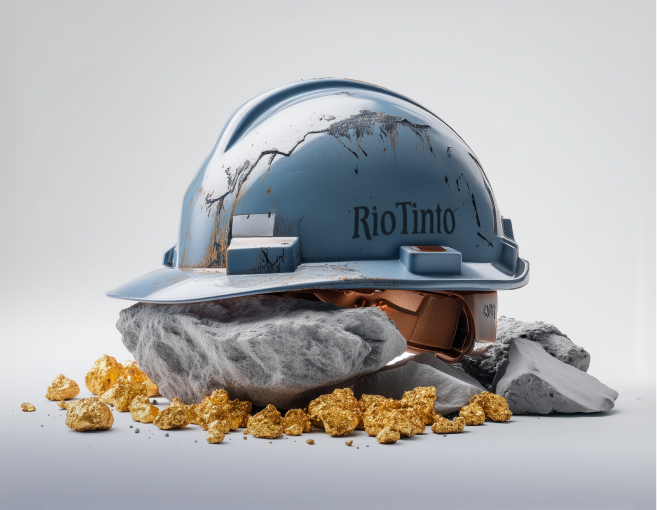
Rio Tinto posts weakest profit since 2020, warns of rising costs
Rio Tinto (ASX:RIO) has posted its weakest profit since 2020, with rising costs in its Australian iron ore division putting the spotlight firmly on efficiency.
The result is the lowest Rio has reported in five years, though it delivered a net profit of US$9.97 billion (A$14.1 billion) for 2025.
And with the blockbuster merger talks with Glencore now off the table, investors are watching closely to see what comes next.
💰 The numbers behind the drop
CEO Simon Trott, who stepped into the role in August, flagged that Australian iron ore mining costs could rise another 6% in the year ahead.
Iron ore prices were down 6% over the year. That was partly cushioned by strength elsewhere, aluminium prices climbed 17% and copper rose 8%.
Iron ore still does the heavy lifting, contributing 56% of Rio’s underlying earnings. Copper accounts for about a quarter.
It’s a different story at rival BHP, which this week revealed copper generated more earnings than iron ore for the first time – a milestone years in the making.
📈 Costs keep climbing
Back in 2018, it cost Rio US$13.30 to produce a tonne of iron ore in Western Australia. In 2025, that figure jumped 77% to US$23.50.
Industry-wide inflation has played a role. So has Rio’s own shift toward more satellite mines, which require extra trucking to central hubs before the ore is processed and railed to port.
More steps. More handling. Higher unit costs.
Rio expects costs to land between US$23.50 and US$25 per tonne in 2026, slightly above what analysts had forecast.
Trott, however, says the team is keeping a lid on things, noting Rio’s cost increases compare favourably with some peers. His focus is clear: grow production, sharpen operations and keep it simple.
🤝 Life after Glencore
With merger discussions now collapsed, attention turns to how Rio drives growth on its own.
Investors are expecting tighter cost control and productivity gains. Trott has made it clear the company won’t chase deals unless they stack up for shareholders.
Glencore’s CEO has left the door slightly open for future talks. But for now, Rio’s strategy looks inward.
On that front, Rio held its dividend steady at US$4.02 per share, a touch better than expected. Analysts described the profit result as broadly in line with forecasts.
Amazon overtakes Walmart in total annual revenue
After three decades of steady growth, Amazon (NASDAQ:AMZN) has officially overtaken Walmart (NASDAQ:WMT) as the world’s biggest company by revenue.
Amazon reported 2025 sales of US$717 billion. Walmart wasn’t far behind, posting US$713.2 billion for the 12 months to 31 January. It ends Walmart’s decade-long run as revenue king and marks a shift from bricks and mortar to clicks and cloud.
This marks a significant shift in the global retail landscape as revenue moves from physical stores to digital platforms.
📊 How Amazon got here
Jeff Bezos famously studied Walmart founder Sam Walton when building Amazon. But over the past decade, Amazon has taken that playbook and run with it.
Revenue growth has been almost 10 times faster than Walmart’s, powered by two big tailwinds:
- The steady move from shopping centres to shopping carts online
- The rise of Amazon Web Services, better known as AWS
Amazon is now the world’s biggest online retailer, with around 2.7 billion visits to its website and apps every month. Walmart still dominates physical retail, operating more than 10,000 stores and clubs globally. Both still make most of their money in the US.
☁️The real engine? AWS
Here’s the twist.
Some analysts argue Amazon didn’t win the retail battle. It simply built a second engine Walmart doesn’t have.
Strip out AWS and Amazon’s 2025 revenue drops to US$588 billion, below Walmart’s total. In other words, cloud computing is doing a lot of the heavy lifting.
And that matters. Data centres have become critical infrastructure in the age of artificial intelligence. AWS sits right at the centre of that shift.
Meanwhile, Walmart’s online push is gaining traction. Amazon, on the other hand, hasn’t had the same success moving into physical retail, even after acquiring Whole Foods back in 2017.
📈 What it means for investors
Being number one by revenue sounds impressive, and it is. But scale isn’t everything.
Investors usually care more about profitability, growth and returns. History shows today’s revenue leader isn’t always tomorrow’s market darling. Before Walmart, the title belonged to Exxon Mobil and General Motors.
Amazon shares are down nearly 10% so far this year. Earlier this month, a tough nine-day losing streak wiped more than US$450 billion off its market value. The sell-off followed news that Amazon plans to spend US$200 billion on capital expenditure this year, almost 60% more than last year and over US$50 billion above Wall Street expectations.
🔦 Some other things we’re shining the Spotlight on:
STORAGE DEMAND: Sandisk (NASDAQ:SNDK), spun out of Western Digital last year, has surged 1,250% over the past year as AI data centres increase orders for its flash storage. Data centre revenue jumped 76% year on year to US$440 million in Q2 FY26, driven by faster, more power-efficient solid-state drives. Its tech can cut power use and server racks by up to 90% compared to traditional hard drives. With memory shortages tipped to last until 2028 and earnings forecast to jump 13-fold this year, Sandisk’s technology is becoming a central component in AI infrastructure.
GUZMAN Y GOMEZ DELIVERS: Guzman y Gomez (ASX:GYG) posted a solid half, with global sales up 18% to A$681.8M, EBITDA rising 23% to A$33M, and Australia leading with a 30% earnings jump. Despite adding 17 new stores and planning more, shares fell around 14% on Friday as U.S. losses hit A$8M, though Co-CEO Steven Marks is on the ground in Chicago to boost growth. GYG plans 32 more Australian openings this year and will pay a 7.4¢ interim dividend, showing steady growth amid U.S. challenges.
HIMS & HERS BUYS AUSSIE HEALTH STAR: U.S. telehealth group Hims & Hers (NYSE:HIMS) is acquiring Australian digital health player Eucalyptus in a deal worth up to US$1.15 billion. Eucalyptus, the company behind Juniper and Pilot, has annual revenue running above US$450 million and has leaned heavily into GLP-1 weight loss treatments. Around US$240 million will be paid upfront, with the rest tied to performance targets through 2029. It’s a clear signal Hims & Hers is backing global expansion and betting big on the weight loss boom.
Keep up to date on the markets by following us on Instagram @superheroau.