

March 30, 2026
When the scoreboard stops making sense
Why are markets nervously watching the same data that used to reassure them? Right now, markets feel a bit like a cricket match where the scoreboard isn’t quite adding up. Growth is slowing. Inflation isn’t settling. And central banks, the ones markets usually rely on for direction, are waiting for clarity that isn’t coming. That…


Scan this article:
Why are markets nervously watching the same data that used to reassure them?
Right now, markets feel a bit like a cricket match where the scoreboard isn’t quite adding up.
Growth is slowing. Inflation isn’t settling. And central banks, the ones markets usually rely on for direction, are waiting for clarity that isn’t coming.
That tension has a name: stagflation.
It’s not locked in. But the risk is rising and for Australian investors with exposure across local and global markets, it’s not something to ignore.
Here’s the key point: stagflation and recession aren’t separate conversations. More often, they’re different stages of the same story.
The scoreboard is blurring
The data isn’t lining up and that’s what’s unsettling markets.
In the US, growth has slowed sharply. Q4 GDP was revised down to 0.7%, half the initial estimate and a big drop from 4.4% in Q3. Inflation isn’t easing either, with core PCE at 3.1%, its highest in nearly two years.
The labour market is starting to soften. February payrolls fell by 92,000, well short of expectations for a 60,000 gain.
That leaves the Fed in a tough spot. Inflation is still too high to cut rates with confidence. Growth is too weak to tighten further. There’s no easy move.
Closer to home, the RBA is facing a similar trade-off. It lifted the cash rate by 25 basis points to 4.10% in March, the second hike this year.
Inflation at 3.8%, along with rising oil prices linked to Middle East tensions, is keeping pressure on. The Bank now expects inflation won’t return to the middle of its 2–3% target range until mid-2028.
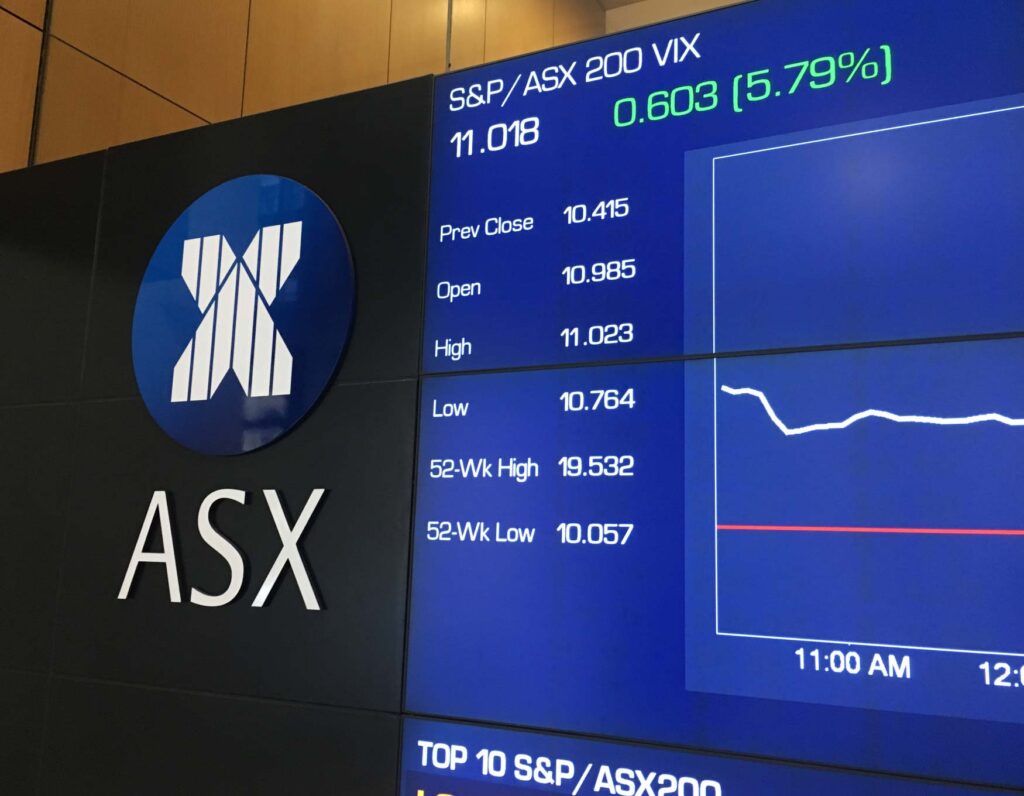
Markets are still treating these pressures as temporary. Volatility has picked up, but it’s well below crisis levels.
That said, energy shocks rarely stay contained. They tend to flow through to transport, production and everyday prices. At the same time, job postings are easing and wage growth is slowing.
Put it together and the risk is clear: inflation holding up while growth weakens. That’s edging into stagflation, a scenario where policy options get limited, fast.
Five drivers pushing the risk higher
There’s no single cause behind what’s happening. It’s a combination of forces, all reinforcing each other.
First, the oil shock
When oil prices rise quickly, the impact spreads across the economy. Transport, production, and input costs all increase and those pressures eventually reach consumers.
For Australia, it cuts both ways. Higher export prices support national income, but households and businesses still face higher costs.
Second, inflation is becoming more structural
It’s no longer just about strong demand. Supply-side pressures, including trade dynamic, are keeping goods prices elevated even as supply chains normalise.
That makes inflation slower to fall and harder to manage.
Third, central banks are constrained
There’s no easy move. Cut too early, and inflation risks rising again. Hold or hike further, and growth slows more sharply.
For Australian investors, there’s an added layer: currency. Moves in the AUD against the USD can amplify portfolio outcomes, sometimes more than the underlying assets themselves.
Fourth, consumers are under pressure
Higher interest rates are flowing through to mortgage repayments and living costs.
In Australia, that’s tightening household budgets. In the US, persistent inflation in key areas like housing continues to erode real wage growth.
Across both economies, consumers are feeling the strain.
Fifth, positioning is being repriced
Markets were positioned for a soft landing well into late 2025. Recession expectations had been easing prior to recent global developments, highlighting how quickly sentiment can shift.
That assumption is now being challenged. Volatility has picked up and portfolios are adjusting as the outlook becomes less certain.
The recession risk hiding in plain sight
This is where the story comes together.
Stagflation and recession aren’t separate risks, they’re closely connected.
Historically, stagflation often leads into recession because it forces central banks into a difficult choice:
- Continue tightening to control inflation and risk slowing the economy too much
- Or ease too early and risk inflation becoming entrenched
Right now, the RBA is still tightening into a slowing economy. That’s one of the clearest pathways toward recession.
This risk is no longer theoretical.
Growth forecasts are being revised lower. Unemployment is expected to edge higher. Confidence is soft.
Globally, recession probabilities are rising and Australia has rarely remained insulated when the US slows meaningfully.
The question isn’t whether recession risk matters. It’s whether it’s being fully priced in.
Scenarios: what pushes Australia in or keeps it out
The outlook isn’t fixed. There are clear paths in both directions.
What could push Australia into recession
A sustained oil shock
If energy prices remain elevated, inflation stays higher for longer increasing the likelihood of further rate rises that could force the economy into contraction.
RBA over-tightening
Even without new shocks, the cumulative effect of higher rates can weigh heavily on demand and risks breaking consumer spending. Mortgage stress is already rising, and another hike in May — which markets are pricing as a genuine possibility pending the Q1 CPI, could tip household demand over the edge.
Slower growth in China
Australia’s commodity export revenues are a key economic buffer. A sharper-than-expected Chinese slowdown, driven by its own property sector stress or reduced industrial activity, would remove that cushion at precisely the wrong moment.
Housing market weakness
High household debt and rising mortgage stress increases sensitivity to rate changes. While falling property values reduce household wealth and can flow through to spending.
What could help Australia avoid it
Global de-escalation
Lower energy prices would ease inflation pressure and give central banks more flexibility. And likely allow a pause or reversal in the hiking cycle, relieving pressure on households and businesses simultaneously.
A softer inflation print
If the late-April inflation print comes in below 0.8% quarterly for trimmed mean, the RBA would have grounds to pause in May. That pause alone would send a meaningful signal to mortgage holders and markets that the peak is in.
Strong export income
Commodity demand can continue to support national income, even as domestic conditions tighten.
Wages holding up
If income growth keeps pace, households are better able to absorb higher costs. A dampening of the consumer contraction scenario would give the RBA more confidence to stop hiking.
The most likely path sits in the middle. Growth slows. The economy weakens. But a full recession is narrowly avoided, at least for now.
What it means across your portfolio
This environment changes how assets behave and how investors often consider positioning portfolios..
Equities
The typical playbook of “lower rates will rescue growth stocks” may no longer apply as cleanly when inflation keeps both the Fed and the RBA sidelined.
Quality matters more. Strong balance sheets, consistent cash flow, and pricing power.
In Australia, resources and energy can provide some inflation protection. But sectors tied to consumer spending may face ongoing pressure.
Bonds
They’re no longer a simple diversifier.
Duration, how sensitive a bond is to rate moves, becomes a source of risk rather than comfort when the risk of the next move in both markets is more likely up than down. If rates stay higher for longer, longer-duration bonds (bonds that are more sensitive to rate moves) can be more volatile. Shorter-duration and inflation-linked exposures may offer more stability.
Alternatives and real assets
These are becoming more relevant again.
Assets like gold and commodities tend to behave differently when inflation is persistent and growth is uncertain. They can help diversify portfolios when traditional assets are under pressure.
Don’t let uncertainty turn into inaction
Even central banks don’t have perfect clarity right now.
That tells you something important: uncertainty is part of the environment. But uncertainty doesn’t mean doing nothing.
It means understanding your position:
- What you’re exposed to
- How your portfolio behaves under different scenarios
- And whether your assumptions still hold
The investors who navigate this well won’t be the ones who predicted the outcome perfectly.
They’ll be the ones who were prepared.
Superhero Markets Pty Ltd (ABN 36 633 254 261) is a Corporate Authorised Representative (CAR 1276309) of Superhero Securities Limited (ABN 96 160 456 315) (AFSL 430150).
Please read and understand our Financial Services Guides, Terms & Conditions, Privacy Policy and Website Terms of Use at superhero.com.au/support/documents, before deciding to use or invest on Superhero. We do not provide financial advice that takes into consideration your personal objectives, financial situation or particular needs. All investments carry risk, so please consider carefully before making any investment decisions and seek independent financial advice. Past performance is not indicative of future performance. Pictures, charts and graphs are provided for illustrative purposes only.
Copyright © 2026 Superhero

Become a part of
our investor community
Why you should join us:
- Join free and invest with no monthly account fees.
- Fund your account in real time with PayID.
- Get investing with brokerage from $2. Other fees may apply for U.S. shares.
Read our latest articles
Make knowledge your superpower and up your skills and know-how with our news, educational tools and resources.













































































































































































































































![The top ASX lithium stocks by trade volume and performance [2023]](https://www.superhero.com.au/wp-content/uploads/2023/06/24-03_blog_news_toplithiumstocks_hero@2x-1024x796.jpg)