

February 24, 2026
Beyond the blowout: Why NVIDIA’s durability matters more than the earnings beat
NVIDIA (NASDAQ:NVDA) reports Q4 results after market close on Wednesday 25 February. Analysts expect revenue of US$65.7 billion and earnings per share (EPS) of US$1.52 – a 71% lift year on year. A beat would exceed analyst expectations. However, market pricing currently reflects high anticipation of such a result.A beat would be impressive. But markets…


Scan this article:
NVIDIA (NASDAQ:NVDA) reports Q4 results after market close on Wednesday 25 February. Analysts expect revenue of US$65.7 billion and earnings per share (EPS) of US$1.52 – a 71% lift year on year.
A beat would exceed analyst expectations. However, market pricing currently reflects high anticipation of such a result.A beat would be impressive. But markets already expect that.
The real focus? What comes next!
When a company keeps smashing expectations, the question shifts from “can they deliver?” to “How long can this last?”
The paradox of perfection
NVIDIA has beaten Wall Street forecasts every quarter since 2022. The AI boom kicked into gear when OpenAI launched ChatGPT. Since then, demand for high-performance chips has surged.
The world’s biggest chip manufacturer, Taiwan Semiconductor Manufacturing Co (TSMC), continues to flag strong orders. Meanwhile, hyperscalers like Alphabet (NASDAQ:GOOGL), Meta (NASDAQ:META), Amazon (NASDAQ:AMZN) and Microsoft (NASDAQ:MSFT) are planning to spend a combined US$650 billion in AI-related activities by the end of 2026.
That capital is mostly going into data centres. And those data centres need a lot of GPUs.
Yet here’s the twist: At a time of unprecedented demand – NVIDIA’s share price has traded sideways for the last six months.
Why? Because NVIDIA remains a widely held consensus long among many market participants. But surprisingly, it remains underowned relative to its size in the S&P 500. Institutions that trail the index often hold less than its almost 8% benchmark weight would suggest.
If guidance lands strong, that ownership gap could close quickly.
Blackwell to Rubin: NVIDIA’s Next-Gen AI Architectures
NVIDIA’s product rollout has been consistent.
Blackwell is the latest generation of NVIDIA’s super-powerful AI chips and is being produced and shipped in large volumes. Rubin, the next version is set for release in late 2026.
Each new generation makes AI computing faster, more efficient and packs more power into smaller spaces (that’s “computing density”). For example Blackwell servers cram 72 GPUs (graphics processing units the specialised chips that crunch massive AI calculations) and 36 CPUs (central processing units the “brain” handling general tasks) into one rack-sized system.
Rubin takes it further with giant setups called “pods” linking 1000 chips for massive scale. Overall performance jumps nearly 10 times over prior tech—think training huge AI models like ChatGPT way quicker.
That roadmap matters. It extends visibility into FY2027 and beyond.
China looks set to return as a customer. US regulators approved H200 chips, slightly downgraded versions of high-performance AI processors, for giants like Alibaba (NYSE:BABA) and Tencent. This could add $5-10 billion in extra revenue. Export rules limit the biggest sales though.
NVIDIA’s CUDA software keeps users hooked. CUDA is a free toolkit that lets developers write AI code once and run it super-fast on NVIDIA chips. Companies build everything on it. Switching to rivals costs time and money, this ‘stickiness’ is designed to encourage long-term loyalty.
Physical AI ramps too. Think robots learning to walk. Self-driving cars navigating streets. Edge computing runs AI on devices, not just cloud servers. We are moving from Science Fiction to Science Fact and those markets are growing now.
Durability beats one good quarter. It asks if the chip roadmap keeps clients buying for years.
Valuation vs value
NVIDIA’s share price looks steep at 47 times trailing earnings. Trailing earnings means profit from the past 12 months. The semiconductor sector averages 43 times. Some rivals like Advanced MicroDevices (NASDAQ;AMD) top 88 times.
Look ahead though. Forward earnings—profits forecast for next year—drop the NVIDIA multiple to 30 times.
The question shifts from “is it expensive?” to “does growth endure?”
Gross margins track profit after making chips. Mid-70% means strong pricing power. Hold that through Blackwell to Rubin. If earnings continue to rise, the forward valuation multiple may decrease, which some analysts suggest could moderate the investment’s valuation risk over time.
Analysts agree. Consensus price target hits US$264, representing a potential 43% increase from current levels if targets are met. Morningstar fair value sits at $240. Models bake in growth. Forecasts can miss though.
What investors should watch
Earnings beats are expected. Guidance is what moves markets.
Here’s your quick checklist:
- Index weight vs institutional ownership – is there catch-up buying ahead?
- Blackwell and Rubin timelines – any production delays?
- Gross margin floor – does mid-70% hold?
- Signals from TSMC and hyperscaler capex – still accelerating?
One weak datapoint won’t break the story. But a slowdown in hyperscaler spending or margin compression would shift sentiment quickly.
Risks worth keeping in view
Revenue concentration is real. A handful of hyperscalers drive a large share of demand.
Geopolitics remains a swing factor. US export controls can change. China demand can fluctuate.
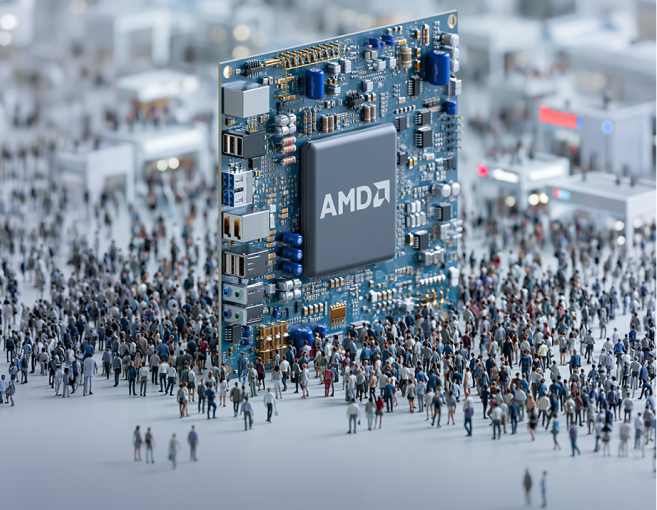
Competition is building too. AMD is pushing its MI series accelerators. Intel continues investing in AI hardware. The U.S. CHIPS Act supports boosting domestic manufacturing capacity.
And eventually, capital spending cycles peak.
AI adoption across enterprises is still early. Estimates suggest penetration sits near 3% today. That’s upside potential – but also proof this is still a developing curve.
The bigger picture
Markets love a blowout quarter.
But what many investors look for in long-term durability includes roadmap visibility, margin stability, high switching costs within the ecosystem and disciplined capital spending from customers.
As NVIDIA results land, investors will be looking to see if the data supports a longer-term growth narrative.
Disclaimer : The opinions expressed in this article are those of the author and do not necessarily reflect the views of Superhero Securities Limited(ABN 96160456315)(AFSL No.430150 )or its affiliates.
Superhero Markets Pty Ltd (ABN 36 633 254 261) is a Corporate Authorised Representative (CAR 1276309) of Superhero Securities Limited (ABN 96 160 456 315) (AFSL 430150).
Please read and understand our Financial Services Guides, Product Disclosure Statement (PDS), Target Market Determination (TMD), Terms & Conditions, Privacy Policy and Website Terms of Use at superhero.com.au/support/documents, before deciding to use or invest on Superhero. We do not provide financial advice that takes into consideration your personal objectives, financial situation or particular needs. All investments carry risk, so please consider carefully before making any investment decisions and seek independent financial advice. Past performance is not indicative of future performance. Pictures, charts and graphs are provided for illustrative purposes only.
Copyright © 2026 Superhero

Become a part of
our investor community
Why you should join us:
- Join free and invest with no monthly account fees.
- Fund your account in real time with PayID.
- Get investing with brokerage from $2. Other fees may apply for U.S. shares.
Read our latest articles
Make knowledge your superpower and up your skills and know-how with our news, educational tools and resources.























































































































































































![The top ASX lithium stocks by trade volume and performance [2023]](https://www.superhero.com.au/wp-content/uploads/2023/06/24-03_blog_news_toplithiumstocks_hero@2x-1024x796.jpg)